The DAEDALUS project was prominently represented at the 35th Annual Conference of the European Society for Biomaterials (ESB 2026), held in Antwerp, Belgium, through a series of scientific presentations, dissemination activities and collaborative initiatives.
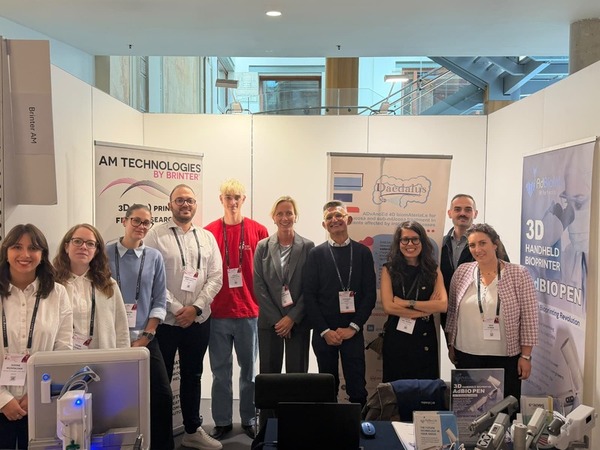
Throughout the conference, visitors had the opportunity to learn more about the project at the AdBioInk exhibition booth, where DAEDALUS roll-up banners and dissemination materials were displayed, contributing to the project’s visibility among researchers, clinicians and industry stakeholders.
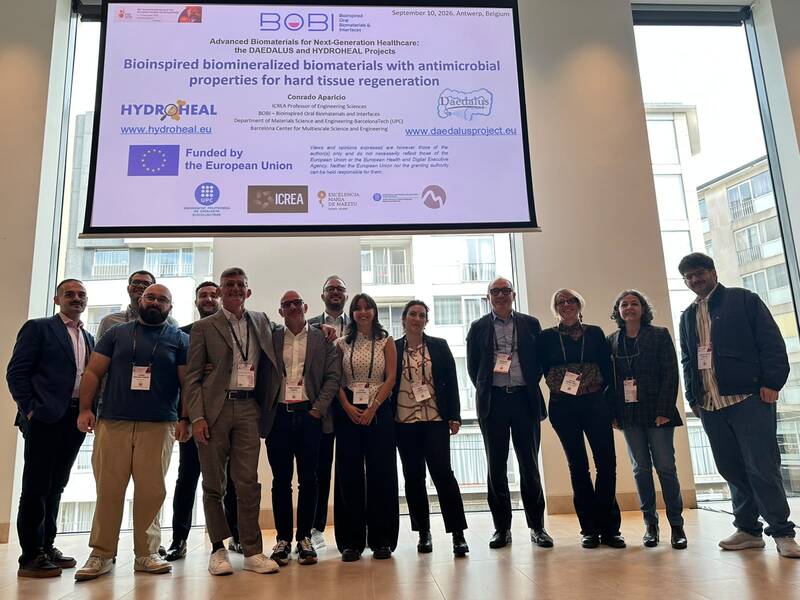
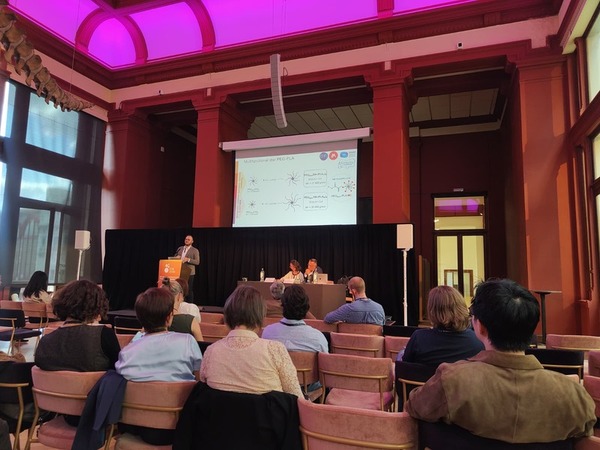
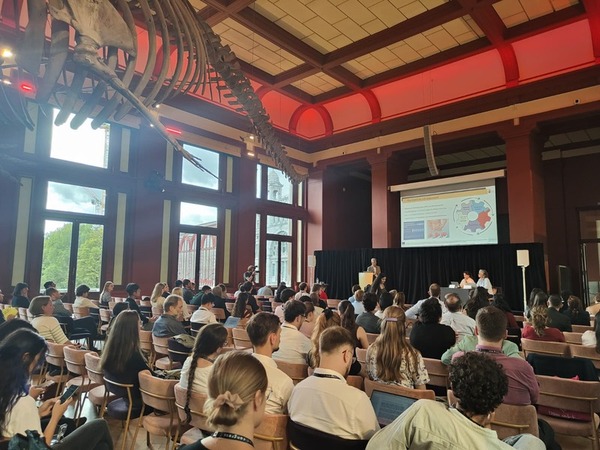
One of the highlights of the event was the joint symposium organized together with the HYDROHEAL project, entitled:
“Beyond Biocompatibility: Advanced Biomaterials for Therapy and Repair – the DAEDALUS and HYDROHEAL Projects”.
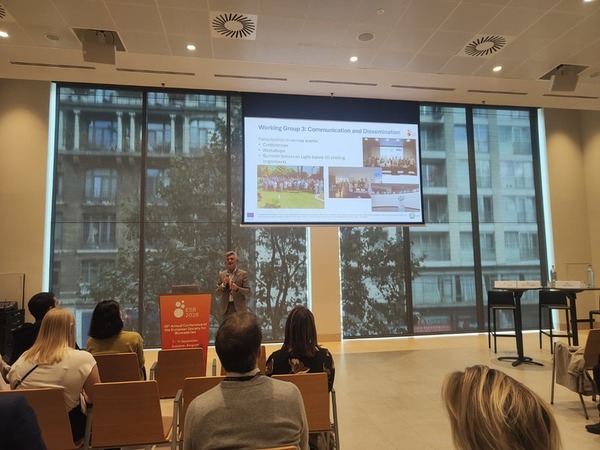
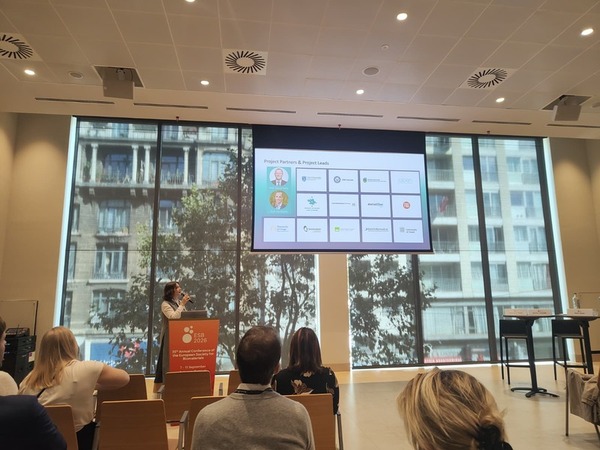
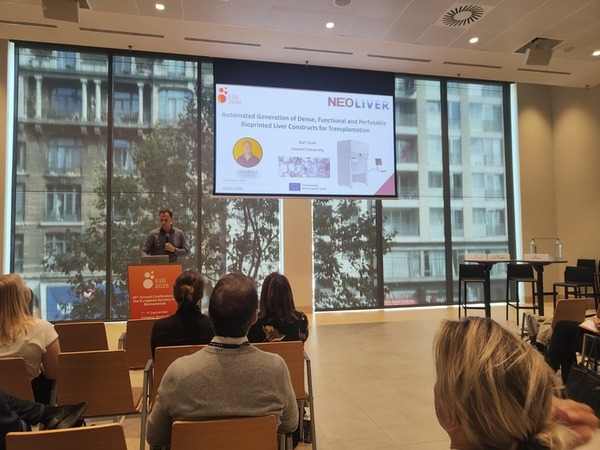
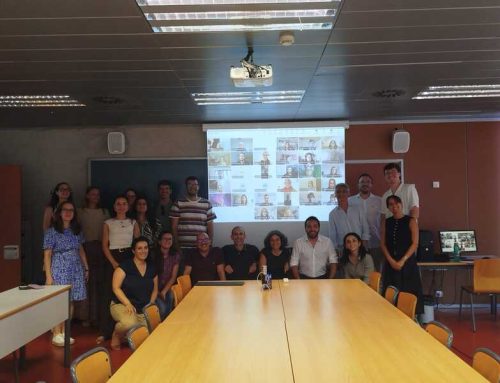
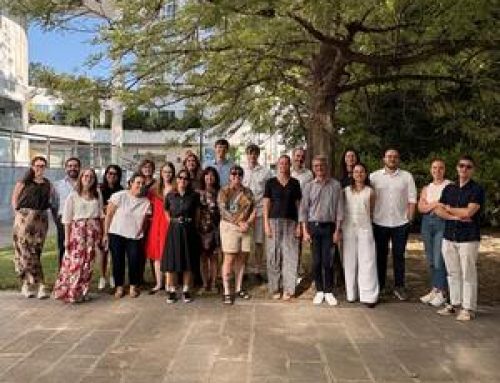
The symposium brought together researchers from both Horizon Europe projects to showcase innovative approaches in biomaterials, biofabrication and regenerative medicine, fostering discussion and collaboration between sister initiatives.
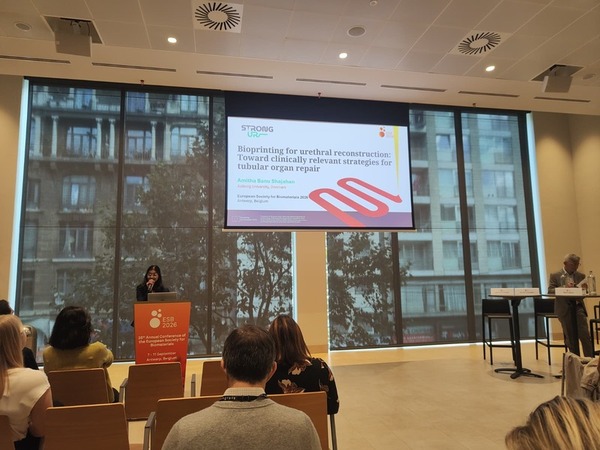
DAEDALUS was further represented through several scientific contributions delivered by project partners.
Prof. Giovanni Vozzi presented the keynote lecture:
“Novel Bioinks for 3D Printing and Biofabrication of 3D Tissue Models”
during the session “Biofabrication of Complex Tissues and Models Using Functional Biomaterials”. The presentation highlighted emerging strategies for the development of advanced bioinks and their applications in tissue engineering and biofabrication.
Gabriele Maria Fortunato delivered the presentation:
“4D Bioprinting of Photo-Curable Polymers for the Fabrication of Self-Folding Structures”
within the session “Smart and Stimuli-Responsive Biomaterials”, showcasing innovative approaches to the development of dynamic and programmable biomaterial systems.
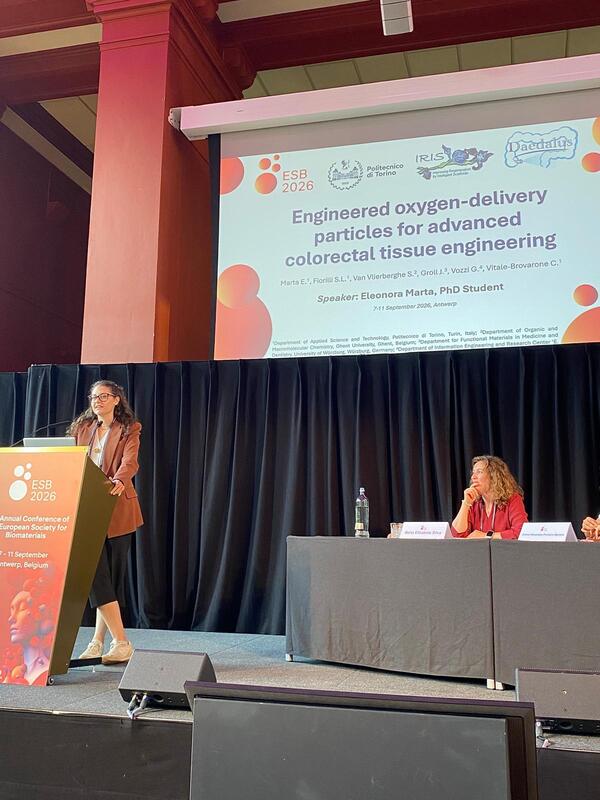
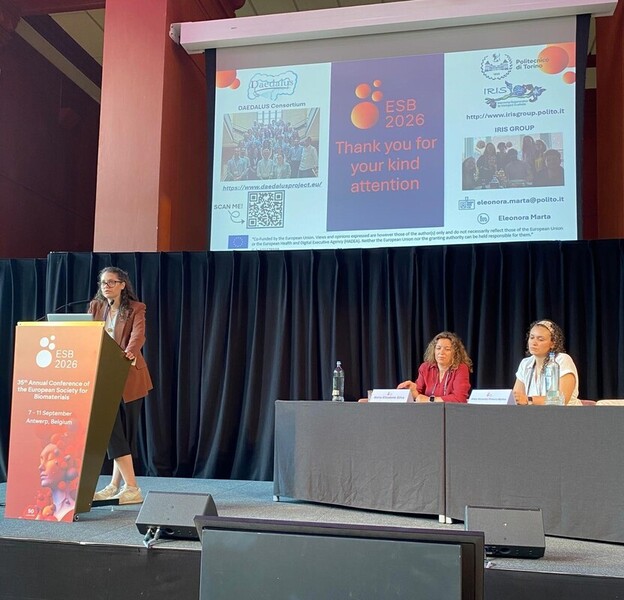
In addition, Eleonora Marta from Politecnico di Torino presented:
“Engineered Oxygen-Delivery Particles for Advanced Colorectal Tissue Engineering”
during the session “Emerging Biomaterials and Fabrication Technologies for Soft Tissue Regeneration”.
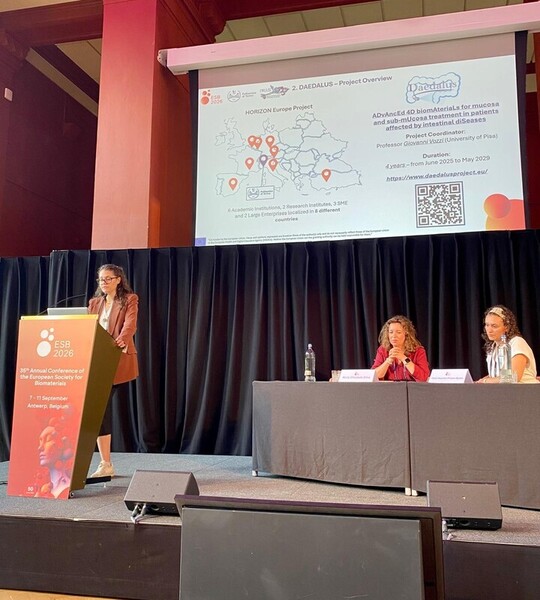
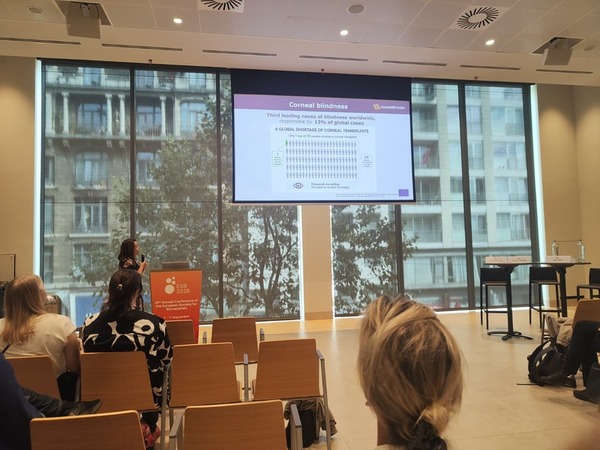
The presentation focused on the development of polymeric particles incorporating calcium peroxide (CaO₂) crystals for the controlled and localized release of oxygen. Alongside the technical aspects of the research, the talk introduced the clinical challenges associated with colorectal diseases and presented the objectives, consortium and vision of the DAEDALUS project.
Together, these activities provided valuable opportunities to disseminate project results, strengthen collaborations and increase the visibility of DAEDALUS within the international biomaterials and regenerative medicine communities.
Browse the gallery below to discover highlights from the symposium, scientific presentations and exhibition activities at ESB 2026.